Introduction
Imagine stumbling upon a set of twisted jawbones in a dry Brazilian riverbed—a relic from 275 million years ago that defies everything we know about prehistoric life. This guide takes you through the exact process scientists used to discover, analyze, and name Tanyka amnicola, a creature whose bizarre jaw structure makes it a true outlier in evolutionary history. Whether you're a budding paleontologist or a curious enthusiast, these steps reveal how researchers pieced together this ancient puzzle and why it still matters today.
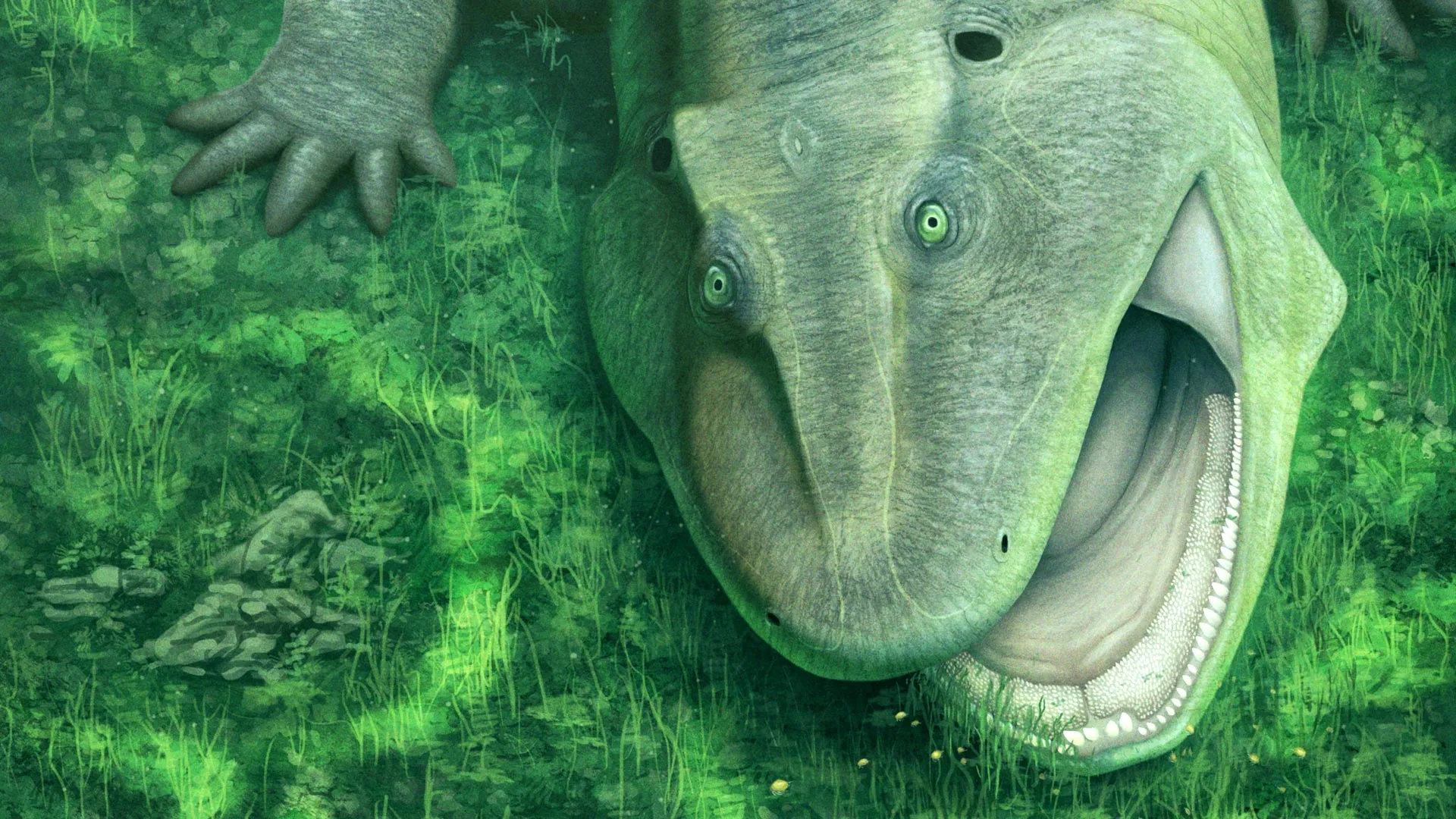
What You Need
- Field gear: Shovels, brushes, sieves, GPS, and protective clothing for dry riverbed terrain.
- Fossil handling tools: Dental picks, chisels, plaster for jackets, and storage containers.
- Dating equipment: Access to radiometric dating lab (e.g., uranium-lead or argon-argon).
- Comparative anatomy references: Digital databases, 3D scanners, and textbooks on Permian tetrapods.
- Taxonomic knowledge: Understanding of synapsids, temnospondyls, and early amniotes.
- Patience and curiosity: The most important tools for any fossil investigation.
Step-by-Step Guide
Step 1: Survey the Terrain in Brazil’s Dried Riverbeds
How it was done: The initial discovery took place in northeastern Brazil, where the Rio do Rasto Formation contains extensive sedimentary layers from the Permian period. Scientists mapped the area using satellite imagery and on-foot reconnaissance, focusing on exposed rock outcrops along a dried riverbed. They looked for bone fragments weathering out of the reddish siltstone. Tip: Pay attention to areas where water has scoured away topsoil—fossils often appear after seasonal rains.
Step 2: Excavate the Twisted Jawbones Carefully
Once a promising site was located, the team carefully removed sediment around the bones. The jaw fragments were unusually coiled, which made extraction tricky. They used fine brushes and dental picks to trace the bone edges without breaking them. Each piece was photographed in situ (in its original position) and then protected with a plaster jacket before transport. Important: Documenting the orientation of the twisted jaw helps later analysis of muscle attachments and feeding mechanics.
Step 3: Date the Fossils Using Radiometric Methods
The surrounding volcanic ash layers provided a precise timestamp. The team collected samples of bentonite (a clay formed from volcanic ash) interbedded with the fossil-bearing sediment. Laboratories used the uranium-lead method on zircon crystals, which returned an age of 275 million years (mid-Permian). This placed Tanyka amnicola in a time when most early tetrapods were already extinct—making it a living fossil of its era.
Step 4: Compare the Jaw Structure with Existing Lineages
The twisted jaw was unlike any known vertebrate. Researchers created 3D CT scans and digital models to study the bone's curvature and tooth attachment points. They compared it with the jaws of early synapsids (mammal ancestors), pareiasaurs, and temnospondyl amphibians. The twisted shape suggested a specialized bite—possibly to hold slippery prey or crack open armoured invertebrates. None of the living descendants show similar morphology, confirming this animal’s uniqueness.
Step 5: Determine the Evolutionary Significance as a 'Living Fossil'
The term 'living fossil' usually refers to animals that survive long past their relatives—like coelacanths. Tanyka amnicola originated from a lineage that should have died out by the early Permian, yet it persisted millions of years later. To confirm this, scientists:
- Analyzed phylogenetic trees: Placed the animal in an ancient branch of tetrapods.
- Checked for ghost lineages: Found no intermediates between earlier forms and this species.
- Examined biogeography: Brazil’s wetland environment during the Permian may have acted as a refugium.
Step 6: Name the New Species Tanyka amnicola
Formal naming follows the International Code of Zoological Nomenclature. The genus name Tanyka comes from an indigenous term for 'twisted,' while amnicola means 'river-dweller' in Latin. Researchers published the description in a peer-reviewed journal, including photographs, diagrams, and a detailed diagnosis that distinguishes it from all other known fossils. The twisted jaw became the holotype.
Step 7: Publish Findings and Share with Community
The final step is to disseminate the discovery. The scientists presented their work at conferences, uploaded 3D models to open-access databases, and wrote outreach articles explaining the twisted jaw. This invites other paleontologists to examine the specimen, propose alternative interpretations, and maybe even find more fossils that flesh out this mysterious species. Collaboration ensures the science remains rigorous.
Tips for Aspiring Fossil Hunters
- Start with known formations: Research areas like Brazil’s Rio do Rasto Formation, which are rich in Permian fossils.
- Learn to spot unusual shapes: A twisted or coiled bone can be a clue to a new species—don't ignore weirdness.
- Document everything: GPS coordinates, layer depth, and associated rocks (e.g., volcanic ash) are vital for dating.
- Use comparative anatomy: Even a single jaw fragment can reveal diet, muscle strength, and evolution.
- Collaborate: Work with specialists in vertebrate paleontology, geology, and 3D imaging to maximize insight.
Remember, every fossil has a story—sometimes one that challenges everything we thought we knew about ancient life. The twisted jaw of Tanyka amnicola is a perfect example of how persistence and careful method can uncover a lost world.