NVIDIA today announced Nemotron 3 Nano Omni, an open multimodal model that unifies vision, audio, and language processing into a single system, enabling AI agents to handle multiple inputs up to 9x more efficiently than current fragmented approaches. The model, available from April 28, 2026, sets a new efficiency frontier for open multimodal models while topping six leaderboards for complex document intelligence and video/audio understanding.
“To build useful agents, you can’t wait seconds for a model to interpret a screen,” said Gautier Cloix, CEO of H Company, an early adopter. “By building on Nemotron 3 Nano Omni, our agents can rapidly interpret full HD screen recordings — something that wasn’t practical before. This isn’t just a speed boost: It’s a fundamental shift in how our agents perceive and interact with digital environments in real time.”
Background
Today’s AI agent systems typically rely on separate models for vision, speech, and language. This “pipeline” approach forces data to be passed from one model to the next, losing context and adding latency with each handoff. An agent processing a video call, analyzing an uploaded audio file, and then checking text logs must run multiple inference passes, fragmenting context and driving up costs.
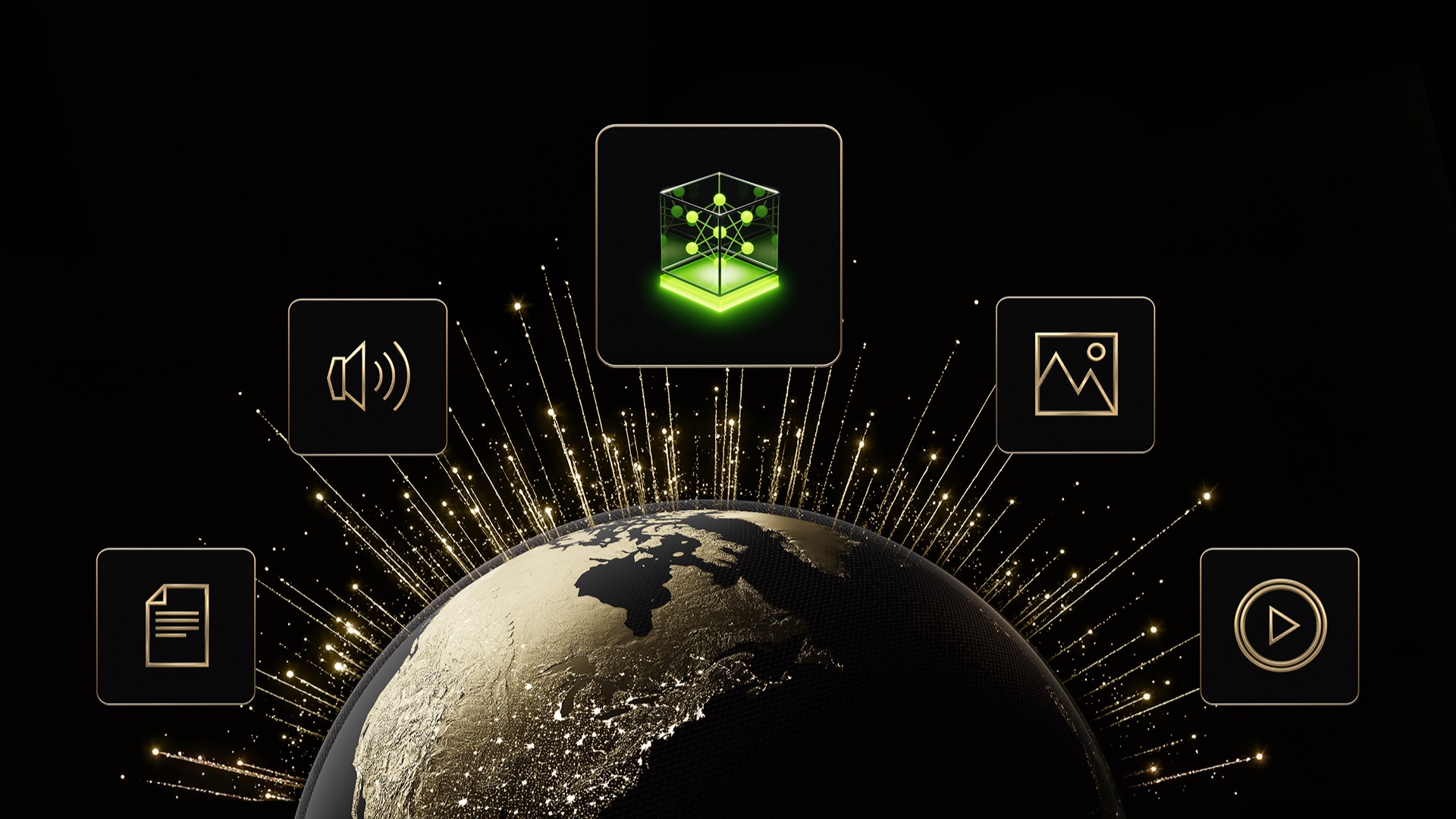
NVIDIA’s new Nemotron 3 Nano Omni attacks this problem head-on by combining vision and audio encoders within a single 30B-A3B hybrid MoE (Mixture of Experts) architecture. The model accepts text, images, audio, video, documents, charts, and graphical interfaces as input, and produces text output—allowing one model to serve as the “eyes and ears” of an agent system.
What This Means
For enterprises and developers building agentic systems, the impact is immediate: 9x higher throughput than other open omni models with comparable interactivity, translating directly into lower cost and better scalability without sacrificing responsiveness. “You can’t wait seconds for a model to interpret a screen when building useful agents,” Cloix emphasized. “This is fundamental.”
The model achieves leading accuracy while maintaining low cost, topping leaderboards in complex document intelligence, video understanding, and audio comprehension. It functions as a multimodal perception sub-agent, working alongside larger models like Nemotron 3 Super and Ultra, or with proprietary systems. This allows developers to deploy a fast, accurate perception layer without the overhead of running multiple models.
At a Glance
- What it is: An open, omni-modal reasoning model – the highest-efficiency open multimodal model of its kind with leading accuracy.
- What it handles: Text, images, audio, video, documents, charts, graphical interfaces (input); text (output).
- Who it’s for: Enterprises and developers building fast, reliable agentic systems needing a multimodal perception sub-agent.
- How it works: Functions as the “eyes and ears” in a system of agents, working alongside models like Nemotron 3 Super/Ultra or other proprietary models.
- Why it matters: Leading multimodal accuracy and 9x higher throughput than other open omni models with the same interactivity, resulting in lower cost and better scalability without sacrificing responsiveness.
- Architecture: 30B-A3B hybrid MoE with Conv3D, EVS, 256K context.
- Availability: April 28, 2026 via Hugging Face, OpenRouter, build.nvidia.com, and 25+ partner platforms.
Early Adopters and Evaluators
AI and software companies already adopting Nemotron 3 Nano Omni include Aible, Applied Scientific Intelligence (ASI), Eka Care, Foxconn, H Company, Palantir, and Pyler. Those evaluating the model include Dell Technologies, Docusign, Infosys, K-Dense, Lila, Oracle, and Zefr.
“This model represents a fundamental shift,” Cloix added, pointing to real-time screen interpretation as a key capability that was previously impractical. The combination of vision and audio encoders within a single model promises to reduce latency, preserve context across modalities, and cut costs—a critical advantage as enterprises scale their AI deployments.
Technical Details and Implications
The 30B-A3B hybrid MoE architecture enables Nemotron 3 Nano Omni to activate only a fraction of parameters per inference, maintaining high accuracy while keeping compute costs low. Its 256K context window allows agents to process long video sequences or extensive documents without truncating information.
For developers, this means they can build agents that perceive the world in multiple dimensions simultaneously—listening to a customer’s voice while analyzing their screen and reading a support ticket—all in one seamless inference call. Supported partner platforms include Hugging Face, OpenRouter, and build.nvidia.com.
The release is expected to accelerate the adoption of multimodal agents across industries such as customer support, finance, healthcare, and manufacturing. By unifying perception, NVIDIA aims to eliminate the inefficiencies that have been a bottleneck for real-time agent interactions.
For more details, visit NVIDIA’s announcement page or explore the model on Hugging Face starting April 28, 2026.